Research
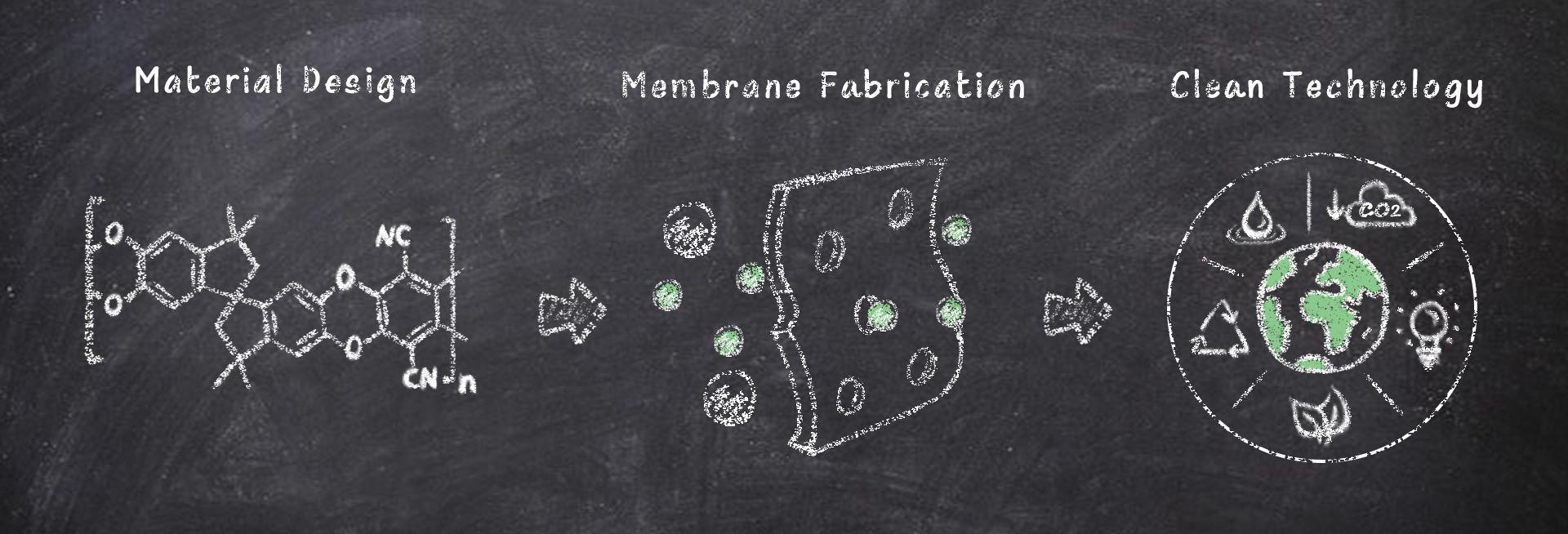
We design porous materials and develop membrane technologies to tackle pressing challenges in energy and the environment.
01
Designing Porous Materials
Function-guided design and synthesis of porous materials with just the right features for specific tasks.
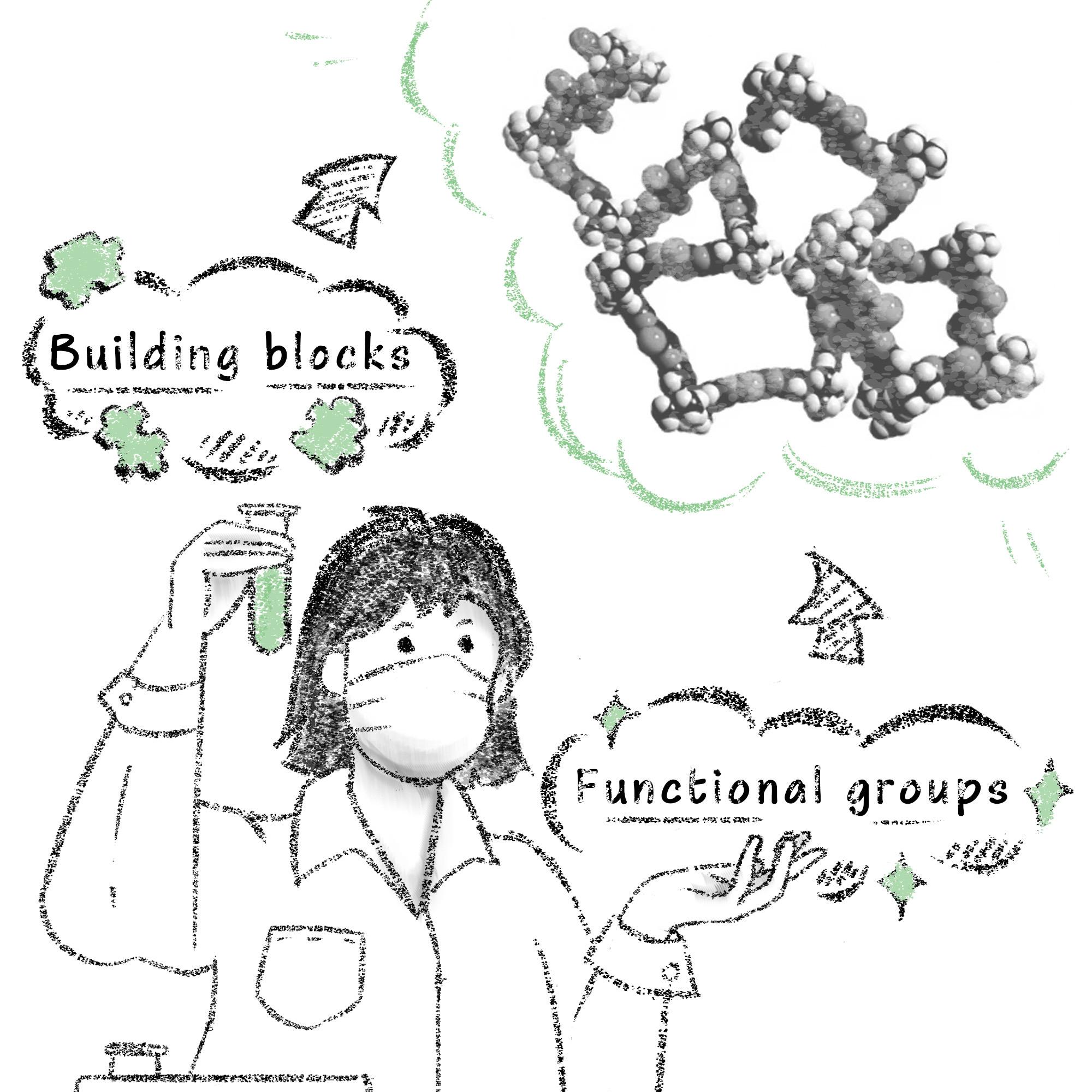
We start with a question: What should this material do? Guided by function, we design and synthesise porous materials with just the right features for specific tasks.
- Building-block design Design and synthesise building blocks with concavities that, when combined, create large, interconnected free volumes in the solid state.
- Functional-group introduction Introduce functional groups to confer specific properties. For example, incorporating ion-conducting groups such as –SO₃⁻ or –COO⁻ enables efficient ion transport.
02
Building Better Membranes
Developing membranes at all scales, shaping pore channels and fabrication routes for efficient, selective transport.
The structure of the materials shapes membrane performance. We develop membranes at all scales and explore how structural features influence membrane properties and behaviour.
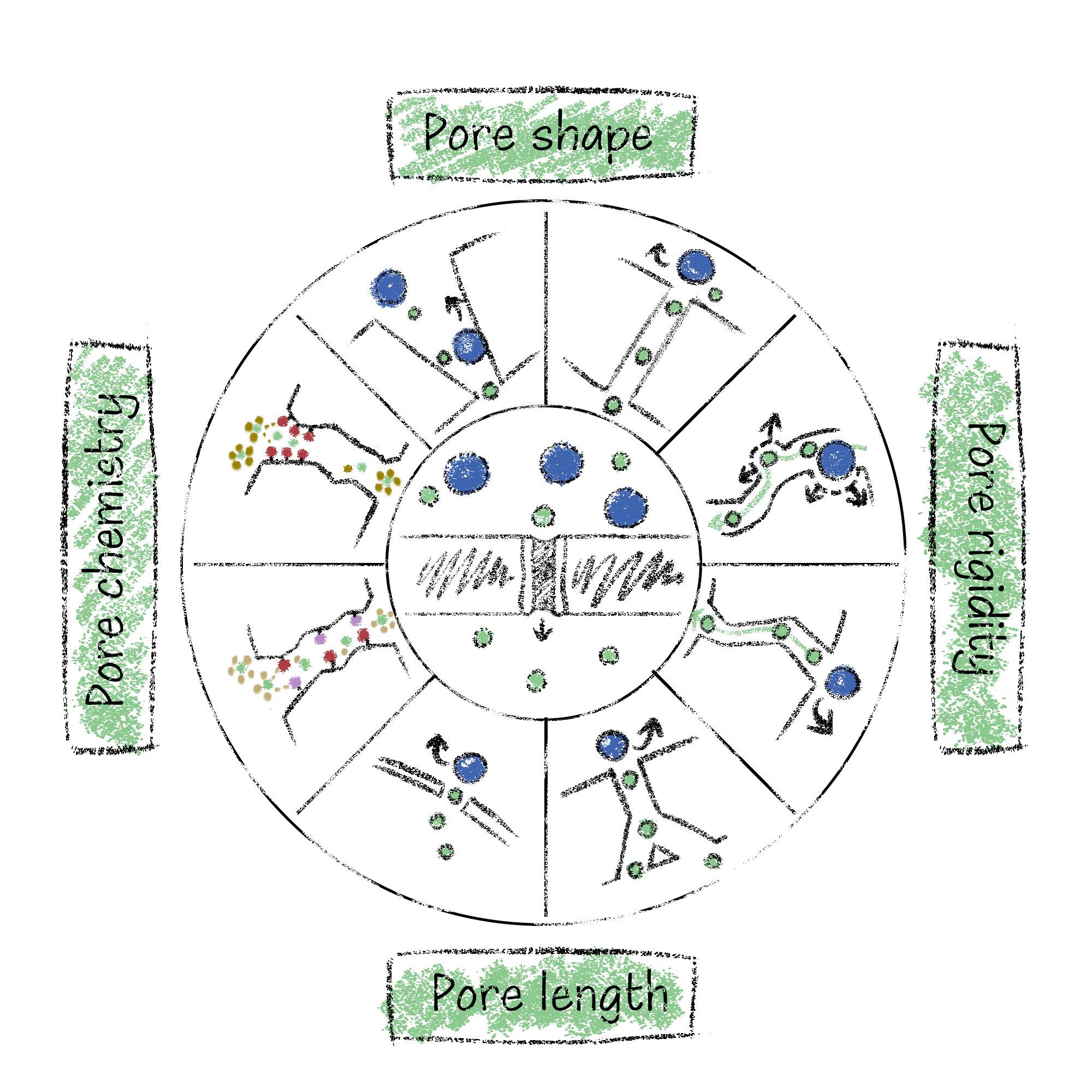
- Pore-channel engineering Design pore channels so that molecules can move through them efficiently and selectively — by adjusting their shape, rigidity, length and chemistry, and by adding functional groups or gradients.
- Membrane forms Make membranes in different forms — such as strong self-standing films or thin layers coated onto a support, shaped as hollow fibres or flat sheets depending on the needs of the separation process.
- Fabrication routes Use a range of fabrication methods suited to the material — from solution casting and spin coating, to scalable roll-to-roll processing, phase inversion and interfacial polymerisation, as well as newer approaches like electrospinning, dip-coating and even 3D printing.
03
Solving Real-World Problems
Engineering membranes for clean energy and environmental challenges — from storage and capture to purification and recovery.
We engineer membranes for real-world use. Our goal is to deliver sustainable solutions for clean energy and environmental challenges using these smart materials.
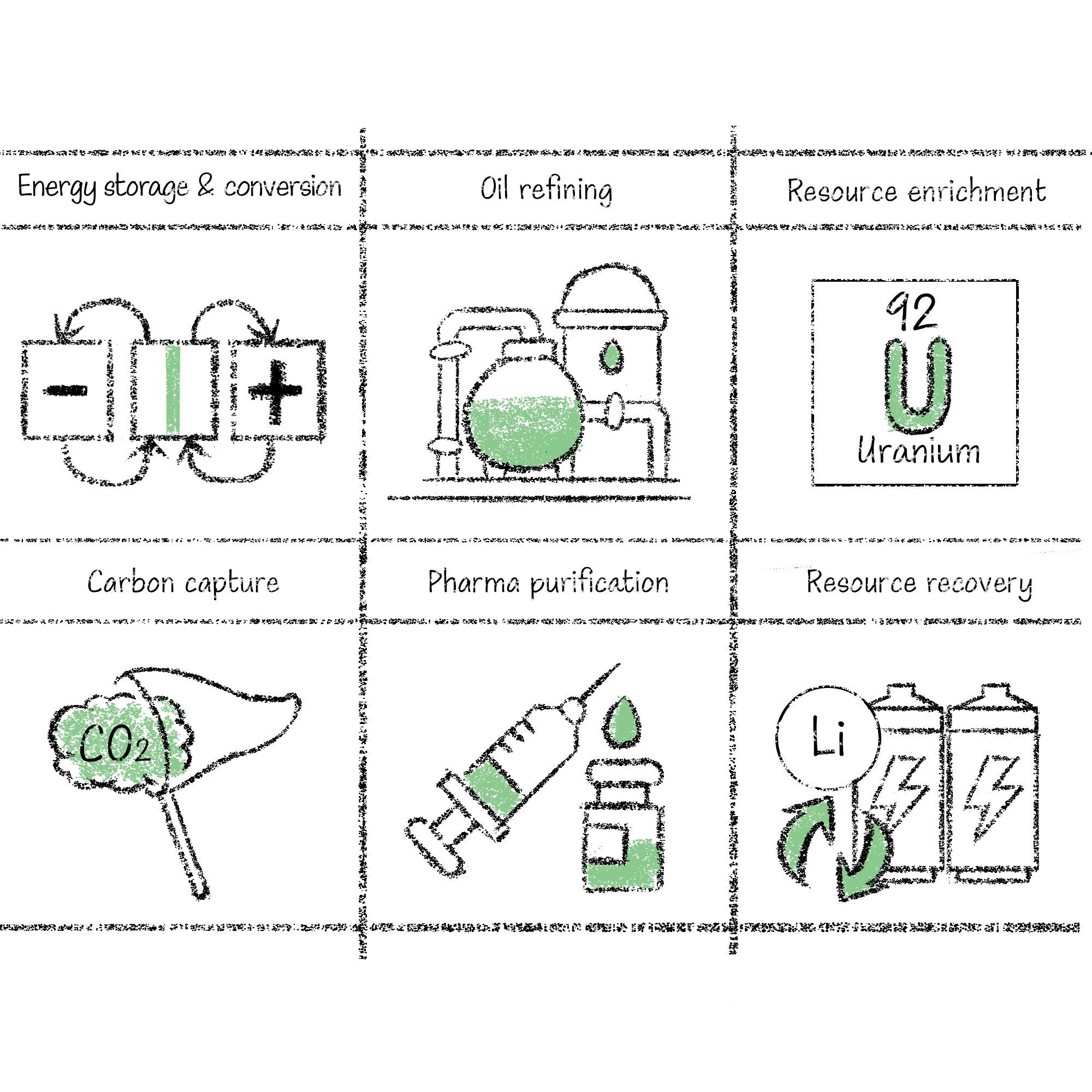
- Energy storage & conversion Batteries, electrolysers and fuel cells store renewable energy and produce clean fuels, reducing dependence on fossil fuels.
- Carbon capture Capturing carbon dioxide helps fight climate change by cutting emissions from power plants and industries.
- Oil refining & petrochemicals More efficient separations reduce energy use and emissions in essential chemical industries.
- Pharmaceutical purification Precise separations ensure safe medicines while lowering waste and costs in drug production.
- Resource enrichment For example, uranium enrichment supports nuclear power, a reliable source of low-carbon energy.
- Resource recovery For example, lithium recovery addresses the growing demand for batteries in electric vehicles and large-scale energy storage.